
나의 하루키 소설 읽기는 <기사단장 죽이기>에서 멈췄어야 했다. 그 후로 이창동 감독의 영화 ‘버닝’의 원작 「헛간을 태우다」가 실린 단편집 《반딧불이》를 읽고 나서 얻은 깨달음을 몇 년 만에 잊고 지금 멍청하게 <가호>를 또 읽고 앉아 있다. 그나마 마지막 책은 선물 받았고, 최신작은 빌려 읽어서 돈 아까울 일은 없다는게 위안이라면 위안이랄까. 하루키의 에세이나 기행문은 정말 즐겁게 읽히는데 소설은 기세가 대단하다고 해야할지 이야기가 지나치게 억지스럽고 개연성이 떨어진다. 스타일리시한 성인 동화를 표방하는건지. 글의 전개에서 ’인물이 등장하고 한 번 사건에 연루되기 시작하면 작가라고 낸들 뭘 어쩌겠나?’의 기운이 진하게 느껴진다. 그리고 글 중간중간 군더더기 표현들이 독서의 맥을 끊을 정도로 끼어들고, 문체가 유보적이다. 체념의 정서에 기반한 쿨함이라고도 할 수 있겠지만 결국은 무책임한거지. 예를 들어 볼까? “생각해보면 – 이라고 가호는 생각한다 – 나는 태어나서 지금껏 어머니의 마음에 들지 않는 것투성이인 딸이었다.” 어순과 주어를 조금 바꿔 쉽게 풀어써 보면, ‘나는 생각해보면 하고 생각한다‘ 이게 도대체 어떤 상태를 묘사 또는 서술하는 말??? 일본 문학의 특징인지 번역의 문제인지 모르겠지만 개인적으로 선호하는 서사는 아니다. 이제 절반 읽었는데 꾸역꾸역 읽어나갈 시간을 생각하니 억울하다. 이게 과연 하루키 문학의 저력인가.
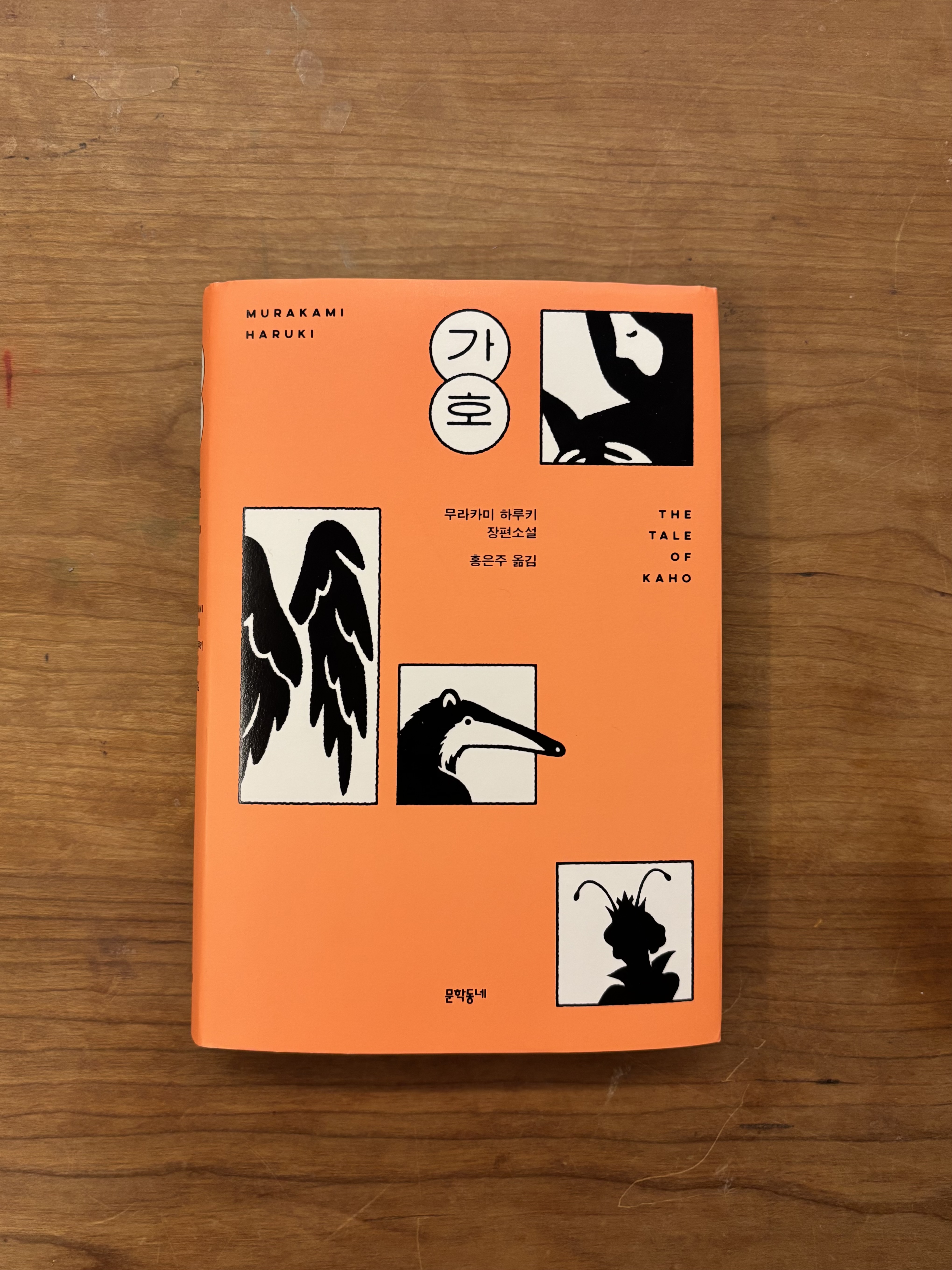


My journey through Haruki Murakami’s fiction should have ended with Killing Commendatore. Years ago, after reading Firefly, Barn Burning and Other Stories—which includes “Barn Burning,” the story that inspired Lee Chang-dong’s film Burning—I thought I had learned my lesson. Apparently I forgot, because here I am, foolishly reading The Tale of Kaho.
The only consolation is that the previous book was a gift and I borrowed this latest one, so at least I haven’t wasted any money.
Murakami’s essays and travel writing are genuinely enjoyable, but his novels seem to run on sheer momentum. The stories often feel contrived and implausible, as though he were trying to write stylish fairy tales for adults. Once a character appears and becomes entangled in some event, the narrative gives off a strong sense of: “Well, what am I, the author, supposed to do about it now?”
His writing is also cluttered with unnecessary phrases that repeatedly interrupt the flow, and the prose is strangely evasive. You could call it a kind of detached coolness born of resignation, but ultimately, it just feels irresponsible.
Here’s an example:
“Come to think of it—Kaho thinks—I have always been the kind of daughter who failed to please my mother.”
If you simplify the syntax and rearrange the subject, it essentially becomes: “When I think about it, I think…” What kind of mental state is that even supposed to describe?
I don’t know whether this is a characteristic of Japanese literature or an issue with the translation, but it certainly isn’t the kind of narrative style I enjoy. I’m only halfway through, and I already resent the time it will take to slog through the rest.
Is this, perhaps, the true power of Murakami’s literature?